
Industry
Naike is established in the industrial vacuum cleaner industry, promoting its sustainable development and progress through various measures such as technological innovation, product research and development, meeting diverse needs, improving services and support, strengthening brand building and market expansion
What are the requirements for furniture factories to rectify during environmental inspections?
The environmental protection department stated that in order to strictly control air pollution caused by PM2.5, PM10, TSP, etc. during furniture production, as well as the physical harm to workers, the emission control of air pollutants in the furniture manufacturing industry is a key focus for pollution prevention and control. Comprehensive inspections are conducted, leaving no corner or detail overlooked during the investigation.
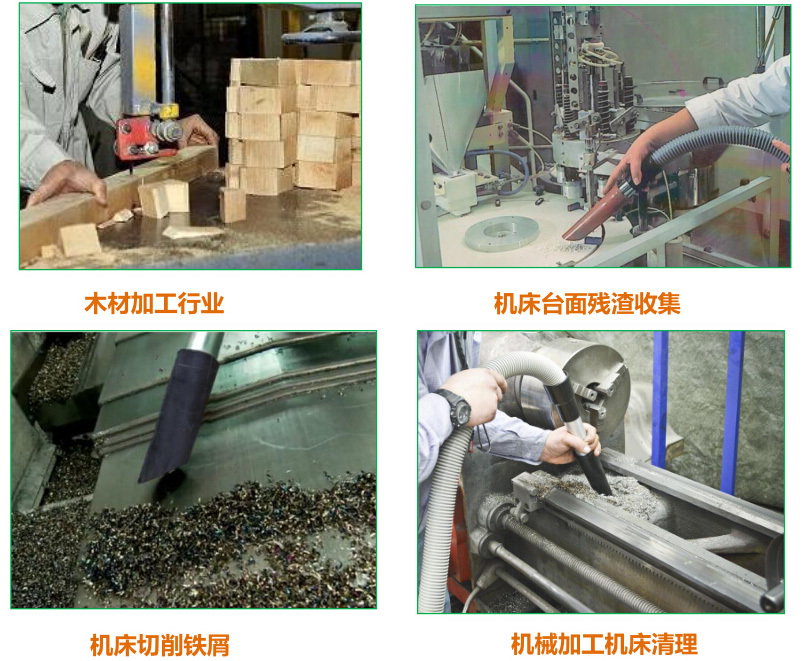
During the inspection process, dust pollution sources are mainly found in the wood cutting area, wood processing workshop, spray painting and polishing workshop, white surface polishing area, and factory boundaries, all of which are thorough inspection points for the environmental protection department.
Specifically, dust emissions mainly occur during processes such as material cutting, drilling, machining, sanding, and polishing.
In addition, the total VOCs emission range specified in the furniture standards in most regions is set between 80mg/m3 and 40mg/m3, with some regions adopting stricter concentration limits.
The painting process in furniture manufacturing often uses oil-based paints, mainly including polyurethane paints, nitrocellulose paints, and alkyd paints. Generally, the spray painting workshops for topcoats use dust-free closed spray booths to ensure the smoothness of the sprayed items, while the primer and color paint processes may have independent spray booths, but due to less stringent requirements for the surface smoothness of the sprayed items, most companies use open spray booths. Companies with better management will install filter cotton devices on the spray painting tables to remove paint mist, while poorly managed companies directly discharge through exhaust fans installed on the workshop walls, which has a very detrimental impact on the environment.
The painting process is a major link in VOCs emissions (including the drying process), and due to the characteristics of dilution and volatilization of the painting materials, it can directly lead to the environmental protection department sealing, rectifying, suspending production, and imposing fines.
Additionally, from the rectification plan formulated by the Dongyang Environmental Protection Bureau regarding pollution issues in rosewood furniture enterprises, one can gain detailed insights into the current environmental protection problems and rectification requirements faced by rosewood furniture production enterprises:
1. Wastewater pollution prevention and control.
Implement separation of clean and polluted water, and separation of rainwater and sewage. Production management is conducted by product and area within the factory, with sawdust wastewater, drying and cooking wastewater, bleaching wastewater, rosewood washing water, and leachate from rosewood storage areas being uniformly collected into the wastewater treatment system for treatment before discharge. Wastewater discharged by unregulated rosewood furniture enterprises must meet the first-level standards in the "Comprehensive Wastewater Discharge Standards" (GB8978-1996); regulated enterprises should, in principle, conduct pretreatment to meet the regulated standards before discharging into centralized wastewater treatment plants. At the same time, enterprises are encouraged to entrust qualified third parties with the capability to uniformly collect and treat wastewater.
2. Air pollution prevention and control.
1) Boilers. In the rosewood furniture concentration area, regional centralized heating and the promotion of clean energy use are encouraged. All combustion boilers with a capacity of less than 6 tons (producing 6 tons of steam per hour) must be eliminated by the end of December 2015. New boilers must meet relevant requirements. For those not equipped for centralized heating, coal-fired boilers with a capacity of over 35t/h must have a desulfurization rate of no less than 90%, while those below 35t/h must have a desulfurization rate of no less than 60%, and must meet the atmospheric pollutant emission standards for boilers (GB13271-2014) and total control requirements.
2) Workshop dust. Processes and workshops that generate dust, such as material cutting, woodworking, polishing, and sanding, must install dust collection devices, and emissions must meet the comprehensive air pollutant discharge standards (GB16297-1996) after treatment.
3) Paint waste gas. Processes and workshops that generate organic waste gas, such as painting and coating, must install waste gas treatment devices, and emissions must meet the comprehensive air pollutant discharge standards (GB16297-1996) after treatment.
4. Noise control.
Use low-noise equipment and reasonable layout. Implement noise reduction measures for high-noise sources and strengthen the daily maintenance of noise control facilities. Ensure that factory boundary noise meets the industrial enterprise factory boundary environmental noise emission standards (GB12348-2008).
You can check the solutions on the official website of Shanghai Naike Industrial Vacuum Cleaner.
recommend products


WeChat Public Number
Contact Information