
Industry
Naike is established in the industrial vacuum cleaner industry, promoting its sustainable development and progress through various measures such as technological innovation, product research and development, meeting diverse needs, improving services and support, strengthening brand building and market expansion
What are the requirements for purchasing industrial vacuum cleaners specifically for textiles?
The textile industry now includes companies such as clothing factories, household textile factories, and industrial textile factories, mainly producing silk from silkworm cocoons, chemical fibers, cotton, cashmere, wool, feathers, down, and waste threads. These types of fibers are fluffy and can easily get stuck in the filter when using traditional vacuum cleaners, quickly filling up the dust collection bucket. Therefore, if used in the textile industry, it is essential to choose a vacuum cleaner specifically designed for textiles. What are the requirements for selecting a textile-specific industrial vacuum cleaner? Shanghai Naike will introduce the characteristics of industrial vacuum cleaners used in the textile industry.
What are the requirements for purchasing a textile-specific industrial vacuum cleaner?
1. Power
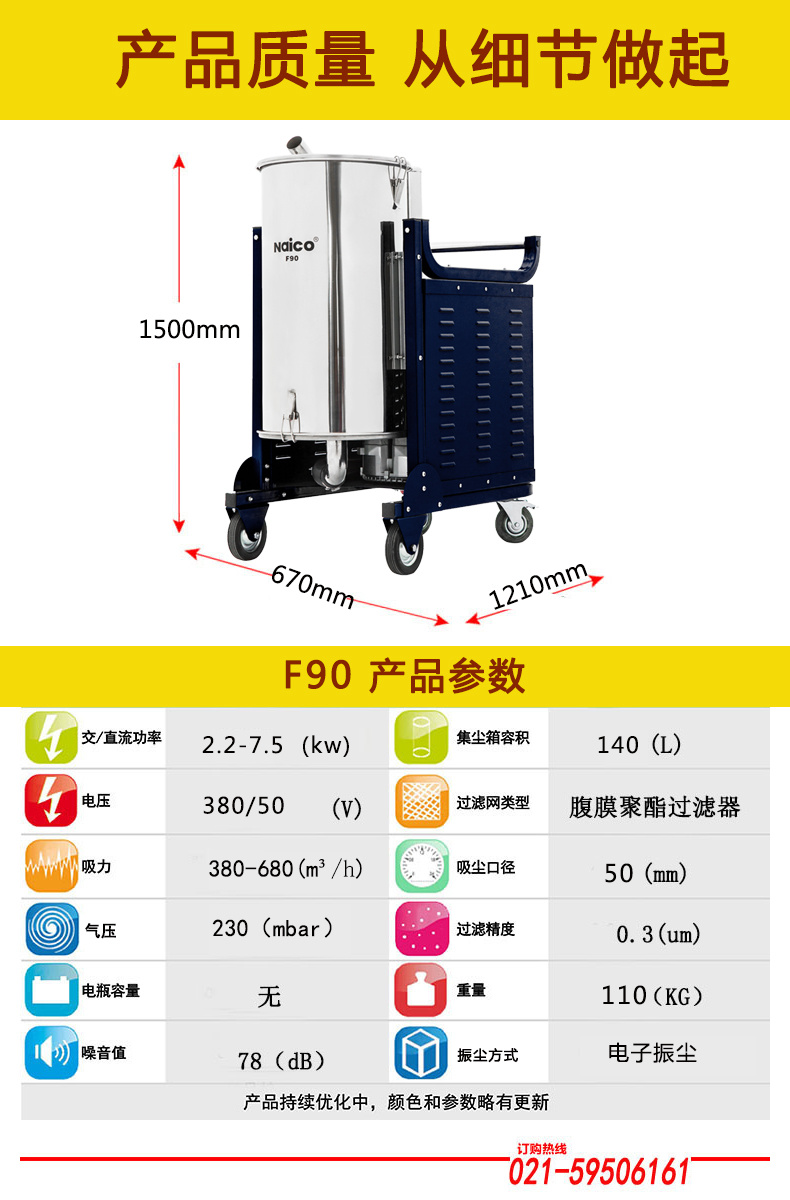
Textile-specific industrial vacuum cleaners mainly suck up fibrous materials, which are generally lightweight and difficult to collect. Therefore, if the power is low, it cannot collect these materials, requiring the power of textile-specific industrial vacuum cleaners to be around 4000W.
2. Different Voltage
Textile-specific industrial vacuum cleaners are considered large industrial vacuum cleaners, so these models are generally 380V, while 220V rarely meets the needs of the textile industry.
3. Air Intake Method
The air intake method of textile-specific industrial vacuum cleaners differs from traditional vacuum cleaners. They use a unique air intake principle that aligns the airflow with the material being absorbed, preventing dust from adhering to the filter. This ensures that the vacuum cleaner does not lose suction due to a clogged filter. Additionally, under vacuum pressure, the fibers in the dust collection bucket are automatically pressed down, avoiding the issue of fluffy fibers requiring frequent cleaning of the dust collection bucket.
4. Motor Suction Efficiency and Time
Due to their different power and voltage, textile-specific industrial vacuum cleaners have high cleaning efficiency and use turbine motors that can operate for extended periods.
5. Price
Textile-specific industrial vacuum cleaners are technologically and configurationally superior to traditional vacuum cleaners, resulting in higher costs, and thus their prices are also higher than those of traditional vacuum cleaners.
If you belong to the textile industry but purchase a regular vacuum cleaner, you will quickly find that the filter gets clogged, the motor keeps breaking down, and it is difficult to clean, making it unusable in no time. After a few uses, the cost will match that of a textile-specific industrial vacuum cleaner. Choosing a vacuum cleaner specifically for textiles will improve work efficiency, save on machine and labor costs, and extend usage time. The above points are what to pay attention to when purchasing a textile-specific industrial vacuum cleaner. I believe that after Naike's introduction, everyone has a better understanding of how to choose a textile industrial vacuum cleaner. If you have any other questions, please consult the Shanghai Naike customer service hotline.
recommend products


WeChat Public Number
Contact Information