
Industry
Naike is established in the industrial vacuum cleaner industry, promoting its sustainable development and progress through various measures such as technological innovation, product research and development, meeting diverse needs, improving services and support, strengthening brand building and market expansion
What are the uses of industrial vacuum cleaners, and why do factories need to use them?
Industrial vacuum cleaners have now become one of the essential pieces of equipment in factories. Their applications are extensive, including daily cleaning in workshops and supporting machinery in various industries. What can industrial vacuum cleaners do in factories?
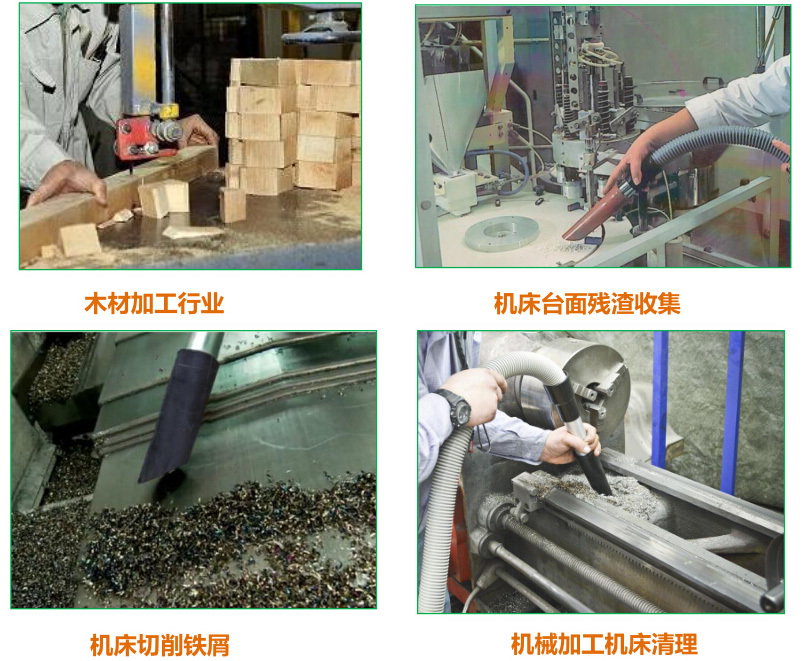
Industrial vacuum cleaners (also known as industrial dust collectors or dust removal equipment) are devices used to collect dust, waste, filter and purify air, and perform environmental cleaning during industrial production processes.
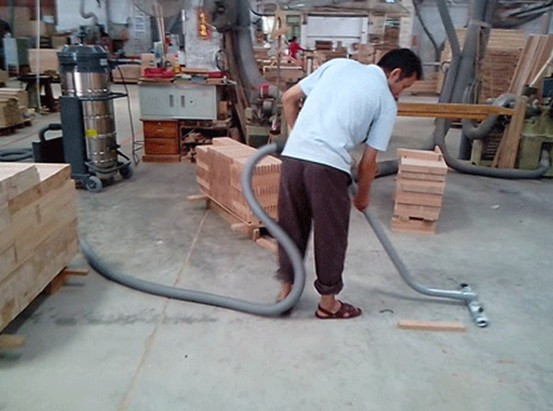
Industrial vacuum cleaners can absorb various types of metal, non-metal, oil, water, and other powdery particles and liquids. They can also absorb toxic and harmful gases. In the grinding industry, they can recover metal powders; in the pharmaceutical industry, they can remove harmful gases; in the textile industry, they can improve product quality; in the chemical industry, they can recover some expensive catalysts. Moreover, as an environmentally friendly device, industrial vacuum cleaners can effectively prevent some occupational diseases, such as pneumoconiosis in welders.
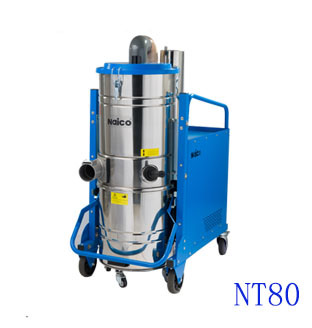
How to choose an industrial vacuum cleaner?
The uses of small industrial vacuum cleaners in industrial production can be simply divided into general cleaning and production assistance. For general cleaning, the requirements for the machine are not high, and a typical small industrial vacuum cleaner can suffice. However, for production assistance, the requirements for the vacuum cleaner are higher. Industrial vacuum cleaners are not a one-size-fits-all solution for all industrial usage problems; rather, they should be selected based on different industries and production conditions to find the most suitable model for the current issues.
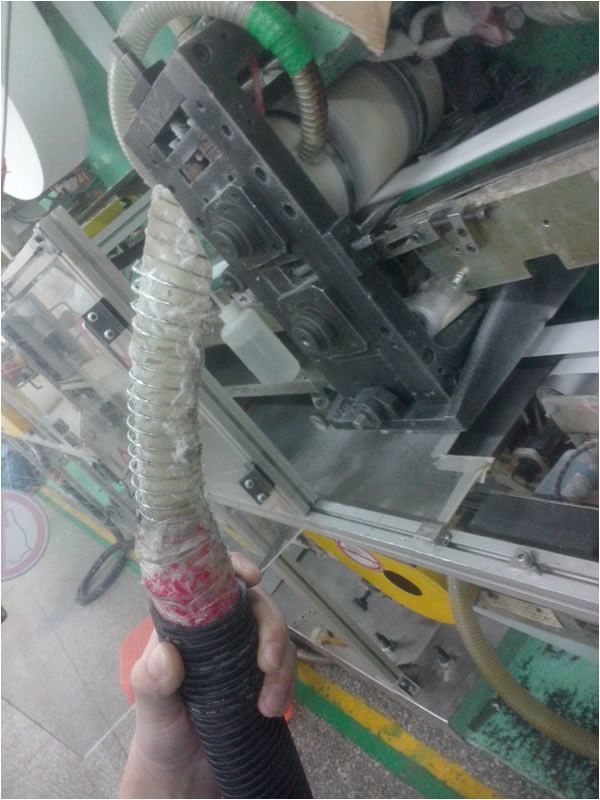
How to choose a small industrial vacuum cleaner
First, there are two important parameters in the technical data of vacuum cleaners: filter area (㎡) and suction power (mbar). One represents power, and the other represents filtering efficiency. This means that when suction is generated, objects will be blocked by the filter, preventing them from entering the motor and affecting its lifespan. The larger the filter area, the faster the processing speed and the longer the usage time. The quality of a vacuum cleaner is determined by three factors: 1. Power system. 2. Filtration system. 3. Dust collection system.
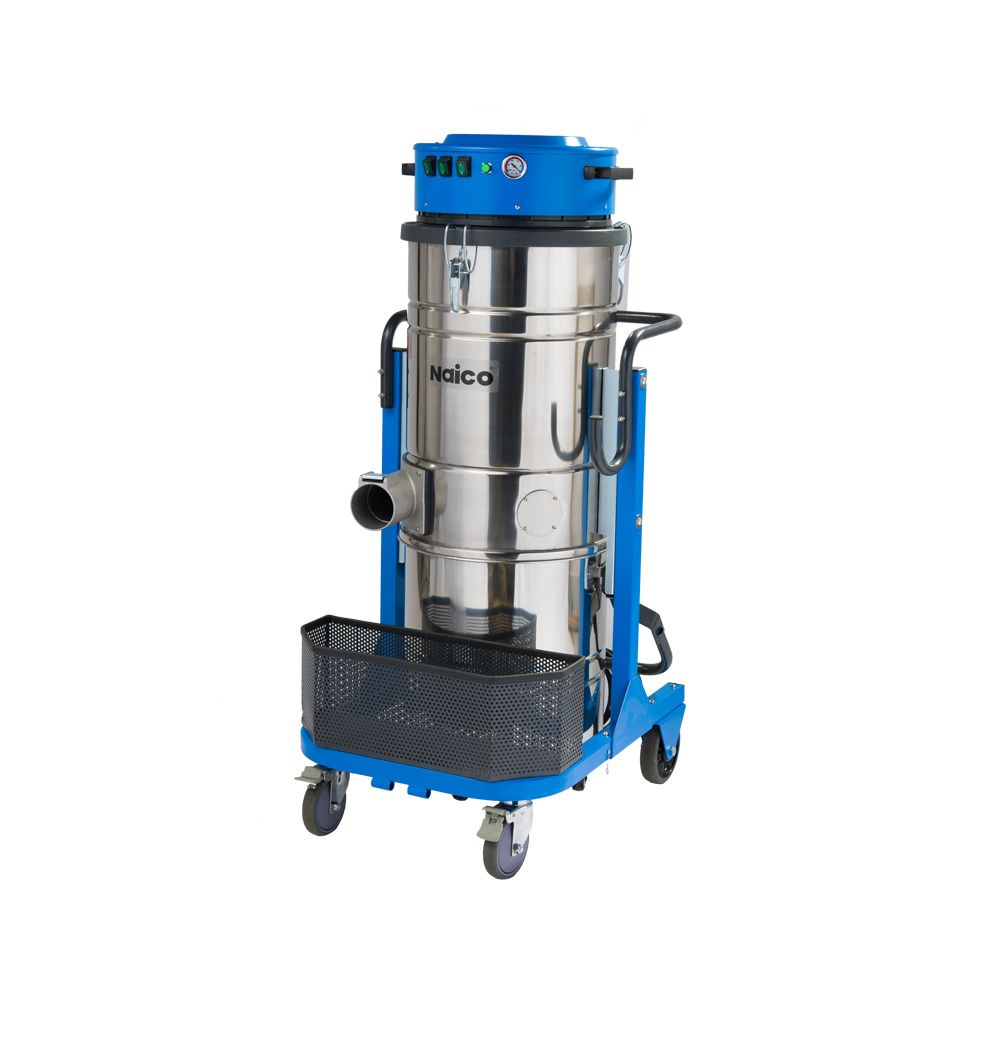 Secondly, there are two key components in the vacuum cleaner: the motor and the filtration system. The motor ensures the basic performance of the vacuum cleaner, while the filtration system ensures its proper working performance. A suitable motor can guarantee the normal operation of the vacuum cleaner, but a poor filtration system cannot solve practical work problems, such as frequent filter blockages, poor dust removal efficiency of the oscillation system, and insufficient filter precision. Additionally, if the filtration system's precision is inadequate, dust can enter the motor, causing damage, and in severe cases, it can burn out the motor. If the filtration system is good but the motor selection is incorrect, it also cannot solve practical work problems, such as overheating and burning out of the series-excited motor, and the airflow and suction data of different types of fans (e.g., vortex fans, Roots blowers, centrifugal fans) focus on different aspects, so the matched vacuum cleaner is also used to solve different problems.
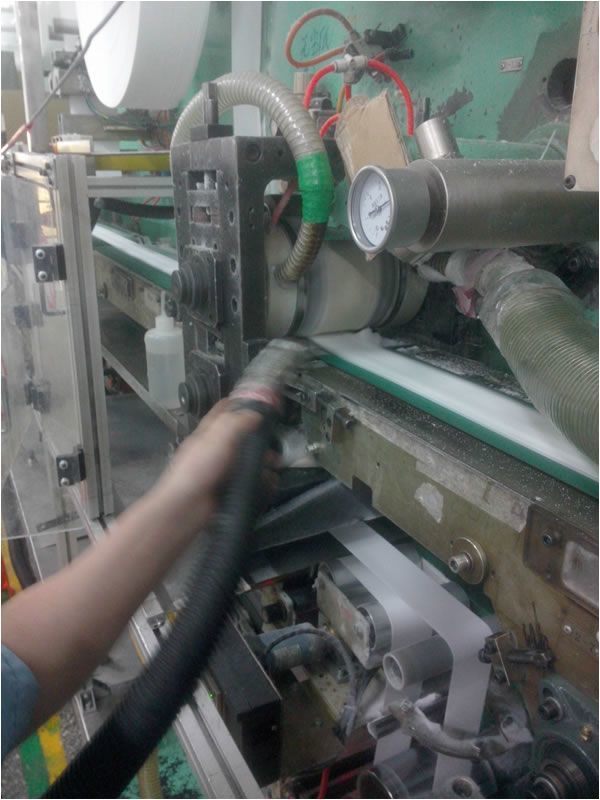
There are some tips for purchasing industrial vacuum cleaners, and here Shanghai Naike will answer your questions.
There are many types of industrial vacuum cleaner fans. Due to differences in function, principle, pressure, materials, and application range, when selecting and purchasing industrial vacuum cleaner fans, it is essential to choose the appropriate fan based on its intended use.
1. Avoid using fans in parallel or series operation. If it is necessary to use fans in conjunction, be sure to select fans of the same model, specifications, and batch for parallel or series operation. It is important to note that when operating in series, there must be a pipeline connection between the first and second stage fans.
2. Choose low-noise industrial vacuum cleaner fans, which are generally high-efficiency fans with low impeller circumferential speed. Additionally, some noise reduction measures should be taken, such as equipping with specialized noise reduction devices or using dampers like spring or rubber dampers to reduce friction vibrations between the fan and motor.
3. If the industrial vacuum cleaner or dust removal system needs to replace the fan, consider the size of the original fan and the issue of safe operation. Assess the operating conditions and past issues of the original fan to comprehensively determine the model parameters of the new fan to ensure that the selected flow and pressure meet actual operational needs.
4. First, understand the types, specifications, and product characteristics of industrial vacuum cleaner fans, as well as the quality of the products and the after-sales service of the manufacturers.
5. Choose the corresponding fan based on the different nature of gases at the work site. For high-temperature environments or high-temperature gases, select high-temperature fans; for corrosive gases, choose anti-corrosion fans; for gas containing coal dust, select coal dust fans; and for gases with explosion and flammability risks, choose explosion-proof fans.
6. After determining the type of fan based on the different nature of gases at the work site, select high-efficiency products with smaller sizes and larger adjustment ranges among similar products. Also, consider the local air pressure and medium temperature's effect on fan characteristics.
What is the working principle of industrial vacuum cleaners?
During normal operation, under the action of the fan, dust-laden air is drawn into the intake manifold and evenly distributed to each intake chamber through various intake branches. It then flows into the filter bag, where a large amount of dust is trapped on the filter bag, while the airflow passes through the filter bag for purification. The purified airflow is then discharged into the atmosphere through the bag chamber and chimney.
As the dust accumulates on the surface of the filter bag, the resistance of the dust collector continues to rise, necessitating regular dust cleaning to reduce the resistance below the specified lower limit for normal operation. The entire dust cleaning process is mainly completed through the actions of a high-pressure air storage tank, solenoid valve, blowing pipe, and dust cleaning control mechanism. First, the control system automatically sequentially activates the solenoid valve, and high-pressure air is blown back through the blowing pipe, causing the dust adhered to the filter bag to fall off into the ash hopper.
Then the solenoid valve closes, ending the dust cleaning operation for that system, and the filter bag returns to its filtering state. The control system then opens other solenoid valves to perform dust cleaning on other filter bags. After all filter bags have gone through the dust cleaning cycle, the dust collector fully resumes its filtering state, and the dust in the ash hopper is discharged to the conveyor through the pneumatic ash discharge valve.
Where are industrial vacuum cleaners applied?
Many factories now use industrial vacuum cleaners to purify the working environment. At the same time, how many friends truly understand the applications of this equipment and the industries it is mainly used in? Industrial vacuum cleaners can absorb various types of metal, non-metal, oil, water, and other particulate waste and liquids, as well as toxic and harmful gases. In the textile industry, they can improve product quality, and in the chemical industry, they can recover some expensive catalysts.
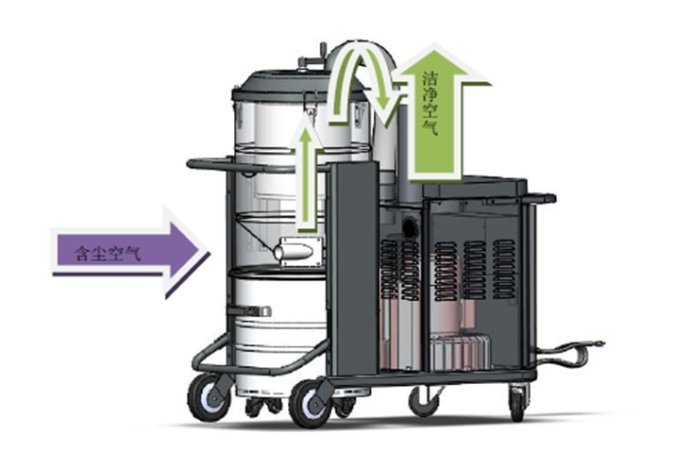
Industrial vacuum cleaners are devices used for industrial purposes to collect and extract waste medium particles, dust, smoke, oil, and water generated during production, operation, and transportation. They have a simple structure, are compact and flexible, have strong suction, large capacity, are safe and reliable, have high purification efficiency, and are widely used.
recommend products


WeChat Public Number
Contact Information